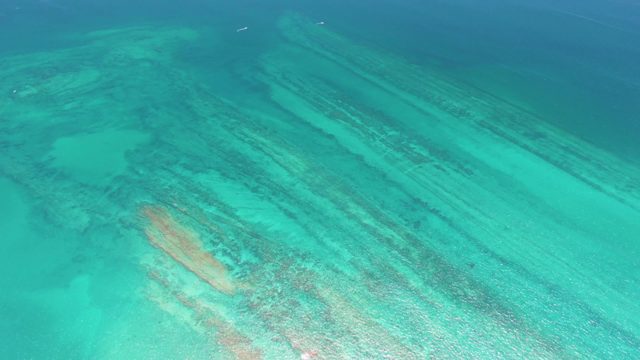
Cabo Pulmo: the reef that came back
A field guide to North America's most successful marine reserve, written for the people who film it, cut it, and license footage of it. Park history with primary sources, month-by-month conditions, access and rules, and 2,248 clips shot here between 2017 and 2024.
Cabo Pulmo at a glance
- Where
- The East Cape of Baja California Sur, Mexico, on the Sea of Cortez, about 90 km from Los Cabos International Airport.
- Protected since
- 1995. A 7,111-hectare no-take national marine park, pushed for by the village's own fishing families.[1][4]
- Status
- Part of the Gulf of California UNESCO World Heritage site (2005) and a Ramsar wetland (2008). Managed by CONANP.[2]
- The reef
- The northernmost coral reef in the eastern Pacific, one of only three on North America's west coast, estimated at 20,000 years old.[3]
- The life
- More than 800 marine species, around 226 of them reef fish. Bull sharks, turtles, mobula rays, and humpbacks in season.[3]
- The village
- Small and off-grid. Dive shops, bungalows, and rentals; no resorts. The last stretch of road in is dirt.
The story: how an empty bay became the benchmark
Cabo Pulmo is a former fishing village two hours of highway and a stretch of washboard dirt from Cabo San Lucas. By the 1980s its families, the Castros among them, had fished the bay close to empty. Then they did something almost no fishing community does: they asked the Mexican government to ban fishing in their own waters. In 1995 the government agreed, and 7,111 hectares of bay became a national marine park where nothing gets taken.[1][4]
What happened next is why the park gets cited in marine science, not just travel writing. A Scripps-led team surveyed the reef in 1999 and again in 2009. Total fish biomass had grown from 0.75 to 4.24 tonnes per hectare, a 463 percent increase, with top predators up eleven-fold. The paper, published in PLOS ONE in 2011, called it the largest increase ever measured in a marine reserve anywhere in the world, and credited the recovery to the community that enforced its own park.[1] In interviews, the researchers went further and called Cabo Pulmo the most robust marine reserve in the world.[7]
The recognition stacked up, and so did the fights. UNESCO inscribed the park in 2005 as part of the Islands and Protected Areas of the Gulf of California World Heritage site; Ramsar listed it as a Wetland of International Importance in 2008.[2] In 2012, Mexico cancelled Cabo Cortés, a development slated for roughly 30,000 hotel rooms and a marina on the coast beside the park, after a national campaign against it.[5] The reef stayed a reef.
For a camera, the geography is the story. This is the northernmost hard-coral reef in the eastern Pacific, roughly 20,000 years old, and it sits in clear, shallow water a short swim off a desert beach.[3] One frame holds cactus and coral. Generic tropical reef stock cannot stand in for that, which is the practical reason this location earns its own guide.
- ~20,000 years agoThe reef's estimated age. It has been building on this shoreline since the last ice age.[3]
- 1980sDecades of fishing empty the bay. The village that pearl-dived and fished these waters watches the catches shrink.[4]
- 1995Mexico declares the 7,111-hectare Parque Nacional Cabo Pulmo. Fishing inside the park ends.[1]
- 2005Inscribed as part of the Gulf of California UNESCO World Heritage site.[2]
- 2008Designated a Ramsar Wetland of International Importance.[2]
- 2011The PLOS ONE study lands: fish biomass up 463 percent in a decade, the largest recovery ever measured in a marine reserve.[1]
- 2012The Cabo Cortés mega-resort is cancelled. Later revivals of the project are also stopped.[5]
- 2017-2024Phil Maher films the park and the desert around it across nine shoots. That work is the library on this site.
What the water is doing, month by month
Cabo Pulmo runs on two calendars: one for water quality, one for wildlife. They only partly overlap, which matters before you book flights or promise a client a specific shot. Ranges below are compiled from dive-operator reporting, so treat them as planning numbers rather than promises.[6]
| Months | Water | Visibility | In the water |
|---|---|---|---|
| Dec-Mar | Coolest of the year, roughly 18-24 C | The green season. North winds stir the water | Humpbacks pass offshore, peaking Jan-Mar. Bull shark diving at its most reliable. Munk's devil rays school in late Nov and early Dec. |
| Apr-Jun | Warming through the low 20s | Improving as the northers ease | Mobula ray aggregations build, peaking around May-Jun. Long calm mornings for topside and aerial work. |
| Jul-Sep | Warm season, roughly 27-29 C | August opens the best window of the year, about 18-27 m | Peak reef activity in warm blue water. Also peak hurricane risk, August to early October. |
| Oct-Nov | Still warm into November | Often the clearest water of the year | Storm risk fades after mid-October. Whale sharks return to the wider region; the big aggregation is La Paz Bay, not the reef itself. |
If the priority is blue water over coral, aim for late October through early December: after the storms, before the north winds. If the priority is animals, the cool green months earn their keep, because that is when the sharks and the whales show up. And the shot the park is known for, the "jack tornado" of thousands of schooling bigeye trevally, does not follow a published calendar: ask the local dive shops where the school has been sitting lately.
Filming here: what to know before you go
| From | Drive |
|---|---|
| Los Cabos International Airport (SJD) | ~1.5 hours, about 90 km |
| Cabo San Lucas | ~2 hours, about 100 km |
| La Paz | 2.5 to 3 hours |
The last 10 km or so into the village are graded dirt, fine for a normal car in dry weather and slow going after rain. The village itself is small and off-grid: dive shops, bungalows and rentals, a few places to eat, no resorts. Book beds and tanks ahead in whale and mobula season, and arrive with fuel, cash, and offline maps.
The coast faces the sunrise. First light comes up over the water, which is unusual for a Pacific-side shoot and worth planning around: the reef shallows go glassy and gold at dawn, and the sierra behind the village takes the last light in the evening. Most of the aerial work in this library was flown in those two windows.
In the water, the park runs on rules that local operators enforce seriously: guided groups, limits on boats per dive site, no gloves, no touching or standing on coral, and park entry paid by wristband, normally arranged through your dive shop. Fishing is banned outright. On drones: we could not find a published official policy for the park, so this guide will not invent one. CONANP manages the park; ask at the park office or through your operator before flying, and expect commercial filming to need permission.
The footage: 2,248 clips from eight years of shoots
Phil Maher has filmed Cabo Pulmo across nine shoots between 2017 and 2024, above and below the water. The library currently holds 2,248 clips from the park and its backcountry, nearly all with 4K masters, all licensed direct. About a third of it is water: reef aerials, the surf line, turtles and sharks and rays in the clear shallows, snorkelers working the coral. The rest is the context most marine libraries skip: 451 desert clips, the dirt roads in, cactus wildlife, the sierra at dusk. 2,116 of the clips have nobody in frame, which keeps commercial licensing simple.
Hover any card to play the preview, or use the quick-look button to check a clip without leaving the page.
Find the shot
A working shot list for a Cabo Pulmo edit
If you are cutting a story about the park, the reserve model, or Baja's coast, this is the sequence most edits need. Every row links into the live catalog.
| Story beat | Look for | Start here |
|---|---|---|
| Establish the geography | High aerials where desert hills meet turquoise water | Cabo Pulmo aerials |
| The reef itself | Low passes over coral fingers, waves on the reef crest | Reef clips |
| Proof of recovery | Turtles, sharks, and rays cruising clear shallows | Sharks · turtles |
| People in the water | Snorkelers and divers on the reef | Snorkel clips |
| The community | The village, boats, and the dirt roads in | Roads and village |
| The desert context | Cactus, doves, jackrabbits, dry arroyos | Desert clips |
| Close the day | Dusk aerials down the coast | Dusk clips |
Licensing, in one paragraph
Every clip here licenses today, direct from the filmmaker: $79 for the royalty-free standard license, $199 for extended broadcast use. The clean master downloads the moment payment clears, a license certificate PDF comes with every order, and every clip has a free watermarked preview you can cut into a timeline before spending anything. Marine life and landscape clips need no releases; where a person is recognizable, the clip page says so. The license page has the full terms, and the direct-vs-marketplace comparison covers when a subscription site is the better deal.
Cabo Pulmo FAQ
Where is Cabo Pulmo?
On the East Cape of Baja California Sur, Mexico, facing the Sea of Cortez. It is about 90 km from Los Cabos International Airport, roughly 1.5 hours by car, and about 100 km northeast of Cabo San Lucas. The last 10 km or so into the village are graded dirt road.
Why is Cabo Pulmo famous?
Because the reef recovered. After the local fishing community pushed for protection, Mexico declared 7,111 hectares a no-take national marine park in 1995. A Scripps-led study published in PLOS ONE in 2011 measured a 463 percent increase in total fish biomass between 1999 and 2009, the largest increase ever recorded in a marine reserve.[1]
When is the best time to dive or film at Cabo Pulmo?
For clear blue water, roughly August through early December, with visibility around 18-27 m and water at 27-29 C; hurricane risk peaks August to early October. For wildlife, the cooler months earn their keep: humpbacks pass December to April, bull shark diving is most reliable in the cool season, and mobula aggregations peak around May and June.[6]
Are there sharks at Cabo Pulmo?
Yes. Bull sharks are a signature dive at the park, most reliable in the cooler months, and their return is read as a sign of the reef's health. This library's shark clips are aerial views of sharks cruising the clear shallows, filmed from above.
Can you fly a drone at Cabo Pulmo?
We could not find a published official drone policy for the park, so this guide will not invent one. The park is a federally protected area managed by CONANP; ask at the park office or through a local operator before flying, and expect commercial filming to need permission. If you need Cabo Pulmo aerials without the paperwork, licensing existing footage is the shortcut.
Do you need a permit or guide to dive the park?
Diving and snorkeling inside the park run through local operators under park rules: small guided groups, limits on boats per site, no gloves, and no touching or standing on the coral. Park entry is paid with a wristband, normally arranged by your dive shop. Fishing is banned outright; it is a no-take reserve.
How is the footage in this library licensed?
Direct from the filmmaker: $79 for the royalty-free standard license or $199 for extended broadcast use, per clip. The clean master downloads the moment payment clears, a license certificate PDF comes with every order, and every clip has a free watermarked preview you can cut into a timeline first.
Do Cabo Pulmo clips need releases?
The wildlife, reef, and landscape clips need none, and 2,116 of the 2,248 clips here have nobody in frame. Where a snorkeler or diver is recognizable, the clip page carries a release notice: editorial use is cleared as shot, and commercial use of a recognizable person needs your own release. The license page explains releases in plain terms.
Sources
- Aburto-Oropeza O., Erisman B., Galland G.R., Mascareñas-Osorio I., Sala E., Ezcurra E. "Large Recovery of Fish Biomass in a No-Take Marine Reserve." PLOS ONE 6(8), 2011. doi.org/10.1371/journal.pone.0023601
- UNESCO World Heritage Centre. "Islands and Protected Areas of the Gulf of California." whc.unesco.org/en/list/1182
- Smithsonian Ocean. "Cabo Pulmo: A World Heritage Biosphere Reserve." ocean.si.edu
- Pulitzer Center. "Can the Gulf of California Be Saved? Cabo Pulmo's Lesson in Prosperity." pulitzercenter.org
- NRDC. "Mexico Rejects Coastal Project That Threatens Cabo Pulmo National Park Once Again." nrdc.org
- PADI. "Diving in Cabo Pulmo." padi.com/diving-in/mexico/cabo-pulmo
- California MPAs. "Cabo Pulmo National Marine Park: the world's most robust marine reserve." californiampas.org
Water temperatures, visibility, and park-rule details are operator-level reporting, and the text above says so where it applies. If you are writing about Cabo Pulmo, cite the primary sources directly; they are linked here so you can. If you spot an error, tell us through the about page and we will fix it and note the change.
Keep reading
- The Cabo Pulmo collection, all 2,248 clips from the park.
- The East Cape guide, the coast Cabo Pulmo sits on.
- The Los Cabos beaches guide, the resort corridor to the south.
- Underwater and marine footage across the Sea of Cortez.
- Aerial and drone footage from the whole library.