Los Cabos beaches: a guide to the two-sea coast
Which sand you can actually swim from, which flies a Blue Flag, when the whales and the swells arrive, and what each beach gives a camera. Written for the people who film this coast and the editors who license it, with 23,312 clips shot here between 2017 and 2023.
Los Cabos at a glance
- Where
- The southern tip of Baja California Sur, Mexico: Cabo San Lucas, San José del Cabo, and the 33 km resort corridor between them.
- Two seas
- The Sea of Cortez on the east, the open Pacific past Land's End. The granite arch at El Arco marks the line.
- Blue Flags
- 25 certified beaches through the 2024-2025 season, about a third of Mexico's total, up from three a decade ago.[1]
- Whales
- Humpbacks and grays every winter. The official 2025-2026 season ran December 15 to April 30.[3]
- Scale
- 3.93 million visitors in 2024, a fourth straight record year.[6] Around 300 days of sunshine.[2]
- The catch
- Much of this coast is not for swimming. The Pacific side hits hard, and the flag on the beach is the rule that matters.
One corridor, two very different seas
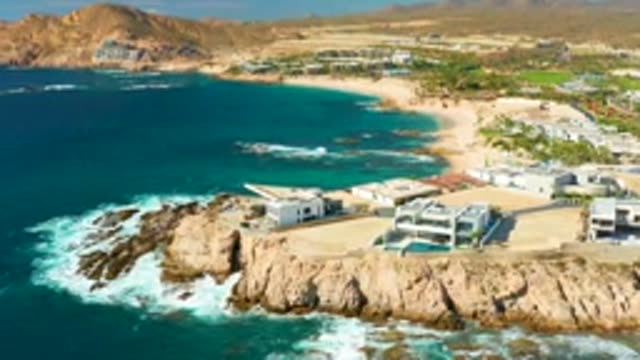
Los Cabos is really two coastlines wearing one name. The Sea of Cortez side, the stretch Jacques Cousteau is credited with calling the aquarium of the world, is the calm one: swimming coves, snorkel reefs, and the corridor's resort frontage, inside a gulf whose islands and protected areas are a UNESCO World Heritage site.[7] Past the granite arch at Land's End, the open Pacific takes over, and the water changes character in the space of a few hundred meters. Lover's Beach and Divorce Beach sit back to back on that boundary: one faces the gulf and takes swimmers, the other faces the ocean and takes nobody.
For a camera that boundary is the whole assignment. Desert hills run straight into turquoise water, hotel pools sit against open surf, and a January drone flight over the corridor can catch a humpback breaching between the swimmers and the horizon. The trade-off is that the postcard and the warning sign describe the same beaches, and productions and travelers both need to know which is which.
The swim guide: where the water takes people, and where it does not
There is no single official list, so this table is the consensus of the local tourism board, Blue Flag certifications, and consistent travel-press safety reporting.[1][2][8] Wherever you stand, the beach flag is the live answer: a black flag means stay out of the water.
| Beach | Side | Swim? | What it is |
|---|---|---|---|
| Médano | Sea of Cortez | Yes | Cabo San Lucas' town beach inside the bay, the main swimmable strip, busy with boats and beach clubs. |
| El Chileno | Corridor | Yes | Calm Blue Flag cove with reef snorkeling, one of the corridor's original three certified beaches. |
| Santa María | Corridor | Yes | Horseshoe cove, Blue Flag, prime snorkel water. |
| Palmilla | Corridor | Yes | The corridor's calm swimming beach near San José, Blue Flag. |
| Acapulquito (Old Man's) | San José | Yes | Blue Flag beach that doubles as the beginner surf break. |
| Lover's Beach | Land's End | Cortez side only | Reached by water taxi from the marina or Médano. Swim the gulf side; the Pacific side is Divorce Beach. |
| Costa Azul / Zippers | San José | Surf | The corridor's main surf zone on summer south swells.[5] |
| El Tule | Corridor | No | Strong currents and a heavy break: an experts' surf spot and a great empty-beach frame, not a swimming beach.[8] |
| Divorce Beach | Pacific | No | Open-ocean shore break, rip currents, and rogue-wave risk.[8] |
| Solmar | Pacific | No | Same Pacific exposure along the hotel zone; walk it, film it, stay out of it.[8] |
The Blue Flag program, run by the Foundation for Environmental Education, certifies water quality, safety, services, and environmental management season by season.[2] The Los Cabos count for 2024-2025: fourteen in Cabo San Lucas (El Corsario, Hacienda, and twelve hotel spans of Médano), eight on the corridor (Acapulquito, El Chileno, Las Viudas, Palmilla, Santa María, and three resort beaches), and three up the East Cape (El Surgidero, La Gaviota, La Ribera), with eleven more targeted next.[1]
The filming calendar
| Months | What is happening |
|---|---|
| Dec-Apr | Whale season, officially December 15 to April 30 for 2025-2026 under NOM-131. Humpbacks and grays, peak sightings January and February, breaches visible from shore.[3][4] Winter light, busy beaches, peak tourism. |
| May-Jun | Whales gone, crowds thinner, south swells starting. The quiet window for clean beach plates. |
| Jul-Sep | Peak surf on the San José breaks as the south swells run, roughly May through September.[5] Hot, humid, and the eastern Pacific hurricane season is in play through the fall. |
| Oct-Nov | Storm risk fades, water still warm, the corridor resets for high season. Late south swells still reach the surf breaks. |
The estuary next door
Ten minutes from the corridor's pools, the San José del Cabo estuary puts a green freshwater wetland against the desert. It has been a protected natural area since 1994 and part of a Ramsar wetland listing since 2008, with 217 waterfowl species recorded, 97 of them migratory.[4] In a region sold on sand, palms and herons are the frame nobody expects, and the aerials of the lagoon meeting the sea cut like a different country. The footage lives in the San José del Cabo hub.
The footage: 23,312 clips, honestly labeled
This is the largest location hub in the library: 23,312 clips shot between 2017 and 2023 across 38 shoots, nearly all 4K, all licensed direct. What it covers deeply: Palmilla in and out of the water, the Chileno cliffs, Costa Azul's surf, San José del Cabo and its estuary, the Puerto Los Cabos marina, resort and golf frontage from the air, the Diamante dunes on the Pacific side, and the beaches running northeast toward the East Cape. Whales show up offshore in season. What it does not have: El Arco itself or the Médano party strip. If your edit needs the arch, a marketplace has it; if it needs the coast the way productions actually shoot it, this is the deeper well. 16,726 of the clips have nobody in frame, which keeps commercial licensing simple.
Hover any card to play the preview, or use the quick-look button to check a clip without leaving the page.
Find the shot
Beaches with their own page
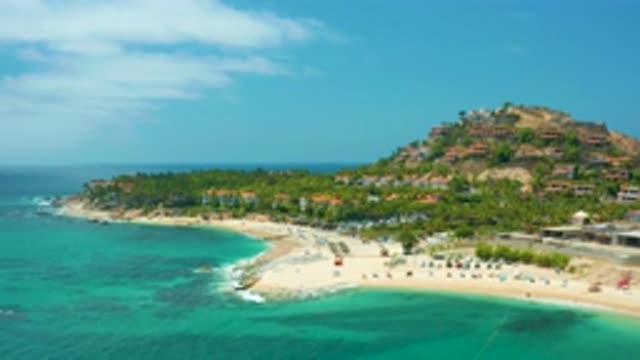 PalmillaLos Cabos corridor
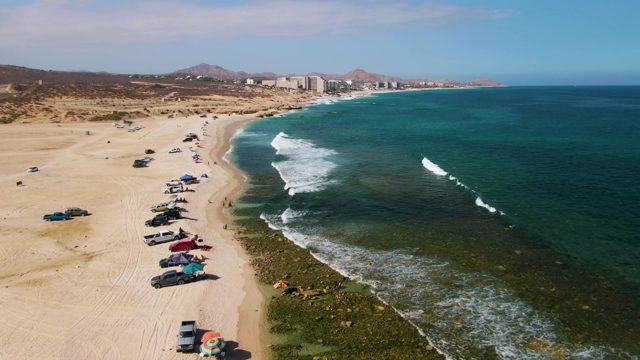 El TuleLos Cabos corridor
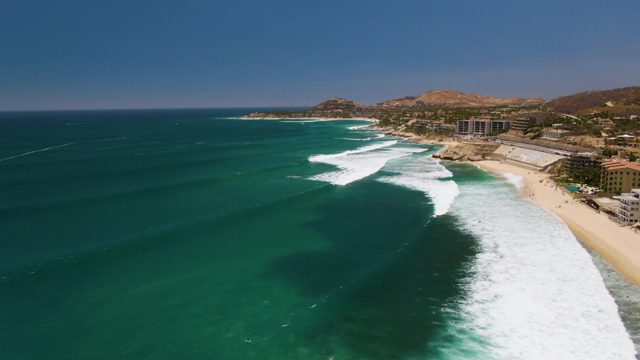 Costa AzulLos Cabos corridor
 Playa AcapulquitoLos Cabos corridor
 La Laguna BeachLos Cabos corridor
 Shipwrecks BeachEast Cape
 Punta GordaEast Cape
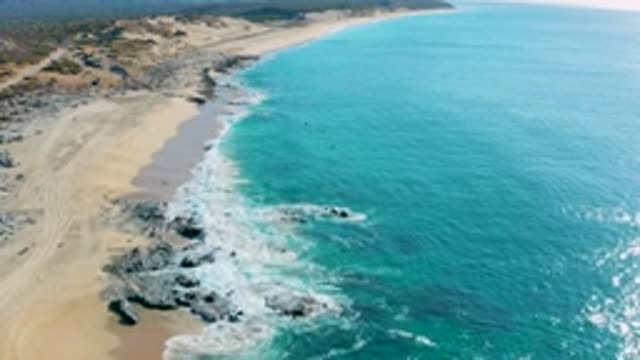 La FortunaEast Cape
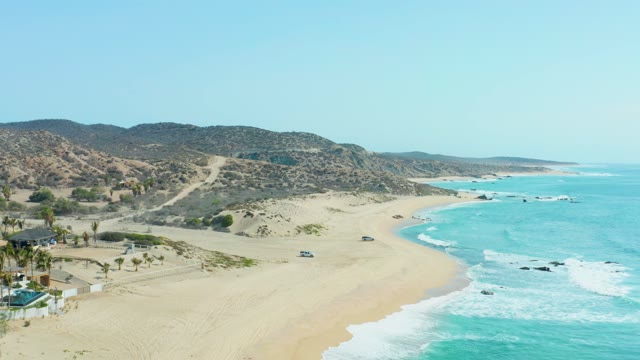 San Luis BeachEast Cape
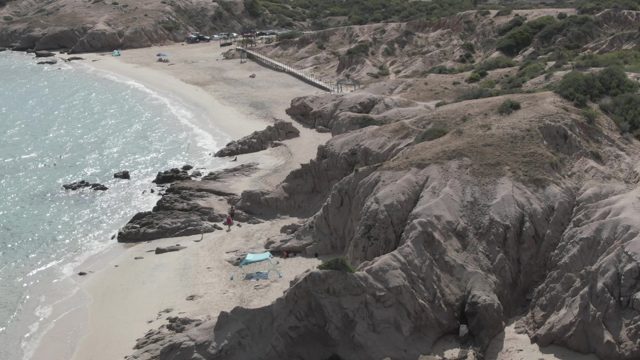 Playa El ArbolitoCabo Pulmo
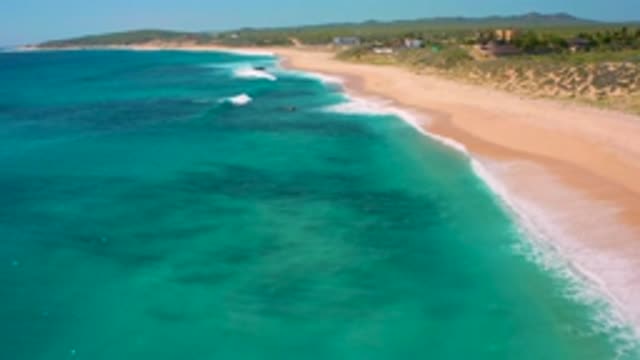 El CardoncitoBaja California Sur
A working shot list for a Los Cabos edit
The sequence most destination, hospitality, and travel edits need, with each row linking into the live catalog.
| Story beat | Look for | Start here |
|---|---|---|
| Establish the destination | Aerials down the corridor: desert, resorts, turquoise | Los Cabos aerials |
| The calm water | Swimmers and snorkelers at Palmilla and the coves | Palmilla · snorkel |
| The resorts | Pools, palapas, golf, and hotel frontage from the air | Resorts · golf |
| The marina | Puerto Los Cabos: docked boats, breakwaters, waterways | Marina clips |
| The surf | Costa Azul and the corridor breaks working | Surf clips |
| The wild card | The estuary: palms, lagoon, birdlife against desert | Estuary clips |
| Season opener | Whales offshore in the winter months | Whale clips |
| The empty coast | The run northeast: Shipwrecks, Punta Gorda, and beyond | East Cape guide |
Licensing, in one paragraph
Every clip licenses today, direct from the filmmaker: $79 for the royalty-free standard license, $199 for extended broadcast use. The clean master downloads the moment payment clears, a license certificate PDF comes with every order, and every clip has a free watermarked preview you can cut into a timeline before spending anything. Beach clips often include people; recognizable swimmers and beachgoers carry a release notice on the clip page, and the license page explains releases in plain terms. The direct-vs-marketplace comparison covers when a subscription site is the better deal.
Los Cabos beaches FAQ
Which Los Cabos beaches are safe for swimming?
The reliably swimmable beaches sit on the Sea of Cortez side: Médano in Cabo San Lucas, and the corridor coves at El Chileno, Santa María, Palmilla, and Acapulquito. Pacific-facing beaches like Divorce Beach and Solmar have violent shore break and rip currents and are widely warned against for swimming, and El Tule is a surf spot with strong currents. Watch the flag system wherever you are: a black flag means stay out of the water.
What is a Blue Flag beach, and how many does Los Cabos have?
Blue Flag is an international eco-label awarded by the Foundation for Environmental Education for water quality, safety, services, and environmental management. Los Cabos held 25 Blue Flag beaches through the 2024-2025 season, about a third of all certified beaches in Mexico, up from just three a decade ago, with plans to add more.[1]
When is whale season in Los Cabos?
The official SEMARNAT whale-watching season for the 2025-2026 winter ran December 15 to April 30, regulated under NOM-131. Humpbacks and gray whales are the common sightings, with January and February the peak months, and breaches are regularly visible from shore.[3][4]
How do you get to Lover's Beach and El Arco?
By water. Water taxis run from the Cabo San Lucas marina and Médano Beach out to Land's End, where the granite arch stands at the meeting point of the Pacific and the Sea of Cortez. Lover's Beach faces the calmer gulf side; Divorce Beach, a few steps across the rocks, faces the open Pacific and is not for swimming.
When is surf season on the corridor?
Summer. The San José breaks, Zippers and Costa Azul, light up on south swells roughly May through September, and Acapulquito (Old Man's) offers the mellow beginner version of the same swell. Monuments, near Cabo San Lucas, is the corridor's left point on west and southwest swells.[5]
Does this library have El Arco footage?
No, and this guide will not pretend otherwise. The coverage here is the corridor and the coast east of it: Palmilla, Chileno, Costa Azul, San José del Cabo and its estuary, Puerto Los Cabos, the Diamante stretch on the Pacific side, and the beaches running up the East Cape.
How is the footage licensed?
Direct from the filmmaker: $79 for the royalty-free standard license or $199 for extended broadcast use, per clip. The clean master downloads the moment payment clears, a license certificate PDF comes with every order, and every clip has a free watermarked preview.
Do beach clips need model releases?
Beach footage often includes people, so check the clip page: recognizable swimmers and beachgoers carry a release notice, meaning editorial use is cleared as shot and commercial use of a recognizable person needs your own release. 16,726 of the 23,312 Los Cabos clips have nobody in frame at all.
Sources
- Mexico News Daily. "Where to find the newest Blue Flag beaches in Los Cabos." mexiconewsdaily.com
- Visit Los Cabos (official tourism board). "Blue Flag Beaches in Los Cabos" and destination weather pages. visitloscabos.travel
- SEMARNAT whale-watching season notice 2025-2026 (Dec 15 to Apr 30, NOM-131-SEMARNAT-2010), transcription. ecoturismo.com.mx
- Visit Los Cabos. "Whale Watching in Los Cabos." Estuary: Pronatura Noroeste, "San José del Cabo Estuary: A Natural Jewel Worth Preserving." visitloscabos.travel · pronatura-noroeste.org
- The Surf Atlas. "Surfing in Cabo San Lucas and Los Cabos." thesurfatlas.com
- Mexico News Daily. "Los Cabos tourism trends 2024" (3.93 million visitors). mexiconewsdaily.com
- UNESCO World Heritage Centre. "Islands and Protected Areas of the Gulf of California." whc.unesco.org/en/list/1182
- The Cabo Sun. "The 5 Most Dangerous Beaches in Los Cabos." Los Cabos Guide, "El Tule Beach." thecabosun.com · loscabosguide.com
Swim-safety rows rest on the consistent consensus of the tourism board, Blue Flag certifications, and travel-press safety reporting rather than a single government list, and the text says so. Conditions change; the flag on the beach outranks this page. If you are writing about Los Cabos, cite the primary sources directly; they are linked so you can. Spot an error? Tell us through the about page and we will fix it and note the change.
Keep reading
- The Los Cabos collection, all 23,312 clips.
- The East Cape guide, the empty coast northeast of the corridor.
- The Cabo Pulmo guide, the marine park at the end of that road.
- Resorts and hotels, the corridor's hospitality frontage.
- San José del Cabo, the old town, estuary, and beaches.